
Selling to a bank is definitely an endeavor worth pursuing given how lucrative a contract with a bank can be as you think about contract value and duration of a contract. However, the process of selling to a bank is often a long one. The quicker you can make an impact to the balance sheet the better as banks tend to be very balance sheet driven. The bank balance sheet can be a bit difficult to understand, but once you understand the dynamics of the balance sheet and develop a product that impacts either the asset side or the liability side you are certainly more likely to get the attention of the c-suite.
The Balance Sheet: Assets Drive Revenue
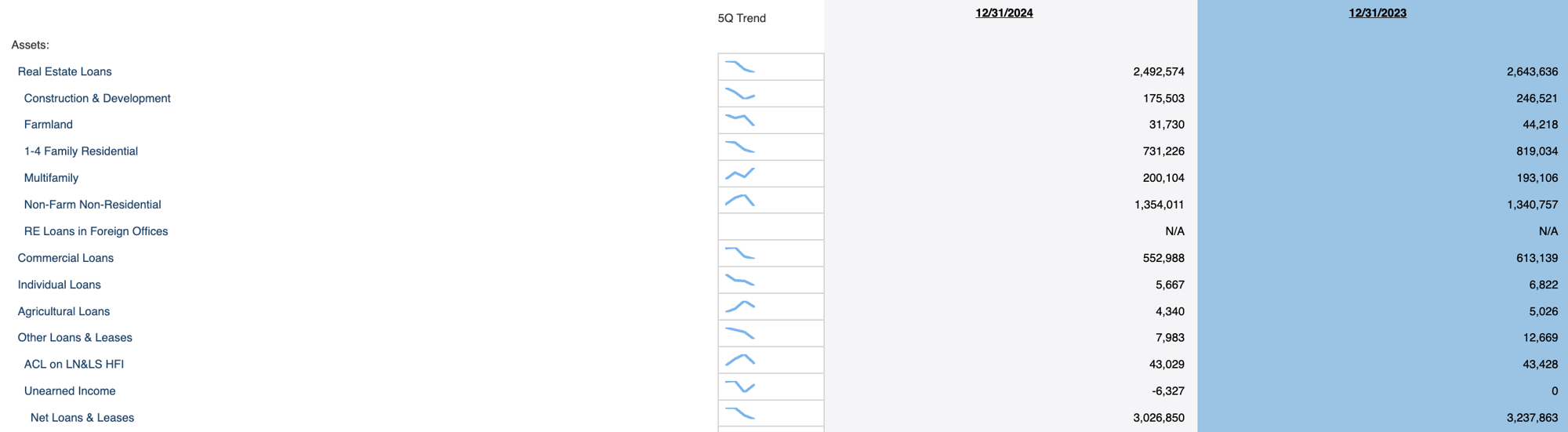
While it's a bit counter intuitive, it is the asset side of the balance sheet that drives the revenue for a bank. The asset side of the balance sheet has many different components, but the most important part for most community banks are the loans the bank is making to both consumer and businesses.
Loans As Assets
Loans come in many different shapes and sizes, but there are several categories the regulators evaluate and measure against other banks. These include real estate, commercial, industrial, agricultural and a miscellaneous category for loans that don't fall in one of those general categories. The real estate category is generally the largest component for most community banks as these types of loans are generally fully funded and secured by tangible real estate (both consumer and commercial). As a bank grows and expands it efforts into commercial (referred to as C&I or commercial and industrial) the real estate component of the banks balance sheet starts to flatten out and the C&I component starts to grow.
Other Types of Assets
There are many other types of assets on a bank balance sheet, but the second most common is the securities portfolio. The securities portfolio changes as the market changes, but the bank is ultimately trying to generate returns from the portfolio while taking the least amount of risk. Understanding that revenue and returns can be generated from various sources in some markets it is easier for the bank to generate a risk free return within their securities portfolio vs. taking risk by making loans. Banks are constantly managing the asset side of the balance sheet the the mix is always changing to try to achieve the best returns.

The Balance Sheet: Liabilities Drive Profitability
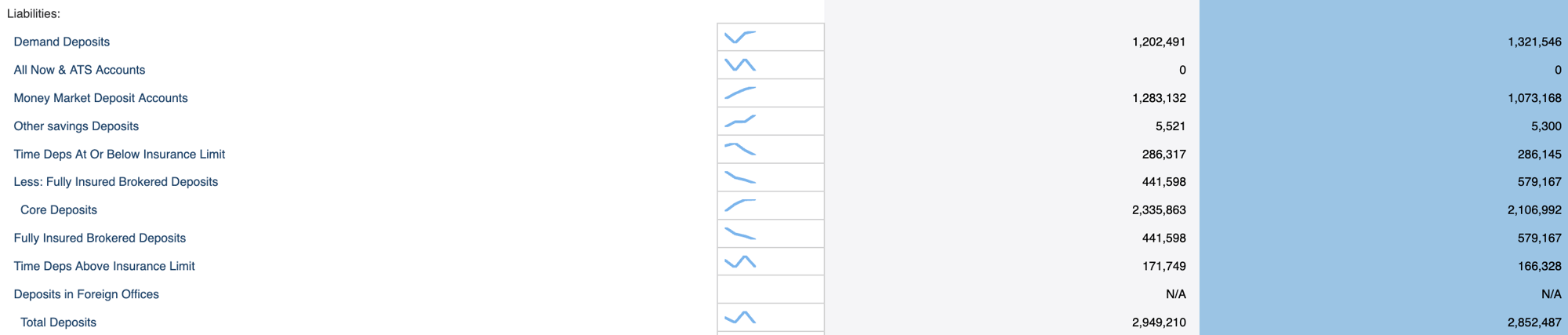
While it is true that the assets drive revenue, the liabilities side of the balance sheet is equally important because that is where the profitability of the bank is often derived, especially in the context of the banks deposit portfolio.
Deposit Portfolios
The cheapest source of funding for the asset side of the balance sheet is often through low costs deposits generated by holding consumer and commercial operating and excess funds accounts.
Borrowings
Outside of the banks deposits there is quite a lot going on with respect to the liabilities side of the balance sheet including any borrowing the bank is doing as part of their asset-liability strategy. These borrowings sometimes take the form of Federal Home Loan Bank borrowings, which banks will sometimes do to make sure they have adequate funding for their assets and to meet regulatory liquidity and capital requirements.

Lessons Learned: Know the Balance Sheet
As a fintech is selling into a bank, the more you know about the balance sheet makeup and any forward looking information about how the balance sheet could improve to generate more profitability, the more effective a firm will be in selling a fintech product to a bank.
The Assets
One thing to keep in mind with respect to loan portfolios is that they are all constructed differently. The makeup of a loan or asset portfolio likely contains many different types of loan from consumer to commercial. In each of those asset classes there are likely many different types within those classes. For example, with a commercial portfolio, a bank may have 6-8 different types of commercial loans each with their own yields and risk profiles. A loan with a higher risk profile should, in theory, return a higher yield to meet the risk-return dynamic. However, when a loan has a higher risk profile, the banks requirement to reserve against that asset is different, which is going to impact the overall return on that specific asset or that asset class. The point is that each loan or asset portfolio is different and work needs to be done to understand the specific makeup of that portfolio. Fortunately, the data needed to evaluate a portfolio is publicly available via the information that gets reported to the FDIC and other regulators on at least a quarterly basis.
The Liabilities, Equity and Capital Requirements
The same can be said for the liabilities portfolio in the context of the deposits a bank has. There are many different types of deposits whether they be consumer or commercial. Within those classes there are subclasses, different durations (i.e., time-horizons) that impact deposit yields. The different classes of deposits also classify as core and non-core deposits, which are viewed differently by a regulator and have different requirements. The idea is to get the best understanding possible of the deposit and liability portfolio when a fintech is developing a calling effort on the bank. Many fintech's take a generic approach to calling on bank, leaning into the concept that "my fintech is going to help the bank generate more deposits." As discussed, that only means something when you can generate the types of deposits that a bank wants that are ultimately accretive to earnings.
Actionable Advice: Where to Start
There are several takeaways in this process of understanding a bank's balance sheet and identifying specific ways a fintech can have a meaningful impact on the balance sheet whether it is in asset yields or deposit costs.
What Does "Meaningful" Mean
When determining what meaningful means to a certain bank, understand the context of the numbers. For example, if a fintech is developing a product that is going to drive more of a certain type of deposit, and the fintech has determined that deposit is going to be accretive to earnings, from there determine if the impact is going to be meaningful in the context of overall deposits or the current overall net interest margin. Said another way and as an example, a meaningful impact to a balance sheet can be a 3-5% move over time, but if the solution is only going to generate a .01% change in overall deposits it might not be worth the banks time.
Pull the Numbers from the FDIC
Fortunately, much of the information a fintech needs to evaluate a bank balance sheet is publicly available even in the case of privately-held banks. Each quarter, and sometimes more often, a bank has to report to the FDIC via a "call report", financial information that the FDIC can use to evaluate the stability of the bank and the safety of insured deposits. A good start is to pull the call report to evaluate the balance sheet and develop talking points from a sales perspective.
Build a Repeatable Process to Evaluate Each Bank
As it relates to understanding a bank balance sheet, the process of evaluating a bank does take time and will impact the time it takes to develop an approach to selling to a bank. Developing a repeatable process to evaluating a balance sheet is key so you can develop a go-to-market process designed to highlight the key aspects of your product.
Use Peer Comparisons As Talking Points
Banks and regulators operate primarily from peer comparisons as a proxy to understand and evaluate various aspects of a bank. Often banks, especially community banks in the $1-10b space have peer groups that are 100-500 banks deep and provide a great proxy for where that bank is against its peers. For example, a key peer comparison is profitability and if the bank is generating profitability that puts them in the top third of their peer group that banks is doing an exceptional job of managing its balance sheet (and other aspects of the business) to drive profitability.
Final Thoughts: Be Prepared
The overall message in the context of selling to a bank is to be prepared and be ready to think and speak like the bank does. The c-suite of the bank thinks about where they are from a balance sheet and P&L perspective and measures most initiatives through this lens. Developing and taking a product to market that positively impacts the balance sheet in a meaningful way will definitely get the attention of the c-suite who is often the party signing the contract.
Resources
There are several resources one needs to be aware of that help evalaute bank financials. As discussed, the call report that banks produce at least quarterly is a great place to start. The Uniform Bank Performance Report is another excellent resource. Both can be found on the Federal Financial Institutions Examination Council ("FFIEC") site. Search for any bank in the country and get free access to bank call reports, UBPR's and much more.
About Finov8r
Finov8r is a leading embedded advisory consultancy that supports banks, fintechs, and corporations. Bridging finance and technology, Finov8r provides tailored solutions that foster profitable growth, simplify technology complexities, and deliver 5x ROI through fintech innovations. With hands-on advisory, Finov8r works within teams to achieve long-term results, unlock new revenue streams, and modernize operations. For more information, visit finov8r.com and follow on LinkedIn.
Get In Touch
-
Bank executive, fintech founder or business owner and want to get in touch regarding Finov8r advisory? Email me at allan@finov8r.com.
-
Media or speaking engagements please contact William Mills Agency in Atlanta.